Drugs around bladder surgery help people who can't have cisplatin
In the VOLGA trial, durvalumab plus enfortumab vedotin around bladder removal lifted two-year survival from 69% to 78% for people who couldn't or wouldn't have cisplatin.
Contents
For people with bladder cancer that has grown into the muscle wall, the standard cure-focused plan is chemotherapy based on cisplatin followed by removal of the bladder. A large share of patients can't have cisplatin, because of kidney problems, hearing loss, heart disease or general frailty, and for them the usual option has been surgery on its own. The phase 3 VOLGA trial tested whether two drugs given around that surgery could do better. They did. Two years after joining the trial, 78.4% of people given durvalumab and enfortumab vedotin were alive, against 69.4% of those who had surgery alone.
The results were presented by Thomas Powles of Barts Cancer Institute, Queen Mary University of London, in the Presidential Symposium at the ESMO Congress 2026 in Madrid, and published in the New England Journal of Medicine on 24 October 2026. The trial was funded by AstraZeneca, which makes durvalumab.
What was tested
VOLGA used two drugs with different jobs.
Durvalumab (brand name Imfinzi) is an immunotherapy. It blocks PD-L1, a protein cancer cells use to switch off the immune system's T cells, so the immune system can recognise the tumour again.
Enfortumab vedotin (brand name Padcev) is an antibody-drug conjugate. The antibody part homes in on a protein called Nectin-4, which is found on most bladder cancer cells, and carries a chemotherapy payload straight to them. It's already widely used for bladder cancer that has spread.
The trial had three arms, with patients assigned in equal numbers:
- Three cycles of durvalumab plus enfortumab vedotin every three weeks before surgery, then radical cystectomy (removal of the bladder), then nine cycles of durvalumab every four weeks after surgery.
- The same plan with a third drug, tremelimumab, added for two cycles before surgery and one after.
- Radical cystectomy alone, followed by observation or whatever post-operative treatment was locally approved.
Giving treatment both before and after surgery is called a perioperative approach. The idea is to shrink the tumour and attack any cancer cells that have already escaped the bladder, then mop up what remains afterwards.
The two drug arms were each compared with surgery alone. They weren't compared with each other.
Who took part
VOLGA enrolled 695 adults with muscle-invasive bladder cancer who were either ineligible for cisplatin-based chemotherapy or had declined it. That split matters: some of these patients were fit enough for cisplatin but chose not to have it. The trial is registered as NCT04960709, with EudraCT number 2020-005452-38.
The final numbers per arm were 233 in the durvalumab plus enfortumab vedotin group, 233 in the triplet group and 229 in the surgery-alone group.
Results in plain numbers
The main measure was event-free survival, assessed by independent reviewers who didn't know which treatment each patient had. An "event" here means the cancer progressing so that surgery couldn't go ahead, the cancer coming back after surgery, or death. Overall survival was the key secondary measure. The data cut-off was 2 March 2026, so these are first interim results.
Durvalumab plus enfortumab vedotin against surgery alone
| Measure | Durvalumab plus enfortumab vedotin (233) | Surgery alone (229) | Difference |
|---|---|---|---|
| Event-free at 24 months | 63.5% | 45.1% | 18.4 percentage points; HR 0.51 (95% CI 0.38 to 0.67) |
| Median event-free survival | not reached | 12.1 months | |
| Alive at 24 months | 78.4% | 69.4% | 9.0 percentage points; HR 0.58 (95% CI 0.40 to 0.83) |
| No cancer left in the removed bladder (pathological complete response) | 45% | 10% | 35 percentage points |
Sources: NEJM abstract (Powles et al., 24 October 2026); median EFS and complete response from Targeted Oncology's report of the ESMO presentation. Complete response was assessed by local pathologists.
A hazard ratio of 0.51 for event-free survival means the risk of the cancer progressing, returning or causing death was cut roughly in half. For overall survival, a hazard ratio of 0.58 means a 42% lower risk of death during follow-up. In absolute terms, for every 100 people treated, about 18 more were free of cancer events at two years, and about nine more were alive.
The pathological complete response figure is striking. In 45% of people who had the two drugs, the surgeon removed a bladder in which pathologists found no remaining invasive cancer. With surgery alone, the figure was 10%. A complete response at surgery is generally linked with better long-term outcomes, which is why researchers track it.
Adding tremelimumab
| Measure | Triplet with tremelimumab (233) | Surgery alone (229) | Difference |
|---|---|---|---|
| Event-free at 24 months | 60.1% | 45.1% | HR 0.61 (95% CI 0.47 to 0.80) |
| Overall survival | not reported as a rate in sources seen | HR 0.77 (95% CI 0.54 to 1.07), not statistically significant |
The triplet also improved event-free survival, but its survival benefit didn't reach statistical significance at this analysis (P = 0.123). Powles told the congress that the extra side effects with tremelimumab may explain why its survival gain looked smaller, as reported by Targeted Oncology. So the trial gives no reason to add the third drug.
A blood test hint
In an exploratory look at 112 patients, researchers measured circulating tumour DNA, fragments of cancer DNA in the blood. Of those with detectable tumour DNA at the start, 60% cleared it before surgery. Those who cleared it had a 24-month event-free rate of 81%, against 55% for those whose tumour DNA stayed detectable. This is a small, exploratory analysis. It suggests a blood test might one day help tailor treatment, but nothing more yet.
Side effects
The extra treatment came at a cost in side effects, and the published numbers are frank about it.
| Side effect measure | Durvalumab plus enfortumab vedotin | Triplet | Surgery alone |
|---|---|---|---|
| Any grade 3 or higher adverse event, any cause | 71.1% | 79.5% | 50.2% |
| Grade 3 or higher event judged treatment-related | 30.7% | 44.5% | not applicable |
| Immune-related side effects | 33% | not reported in sources seen | 3% |
| Stopped treatment because of side effects | 21% | not reported in sources seen | not applicable |
Sources: NEJM abstract for grade 3 or higher rates; immune-related events and discontinuation from Targeted Oncology.
Half the people in the surgery-alone arm had a serious (grade 3 or higher) adverse event, which reflects how demanding radical cystectomy is in itself. Adding the drugs pushed that to 71%. About three in ten people on the doublet had a serious side effect that doctors attributed to the treatment, and about one in five stopped treatment early because of side effects.
Immune-related side effects, where the immune system attacks healthy organs such as the thyroid, bowel, lungs or skin, affected a third of people on durvalumab. Most can be managed with steroids or hormone replacement, but some are lasting. Enfortumab vedotin has its own well-known problems listed in its prescribing information, including skin reactions, nerve damage causing numbness or tingling, eye problems and raised blood sugar. The sources we've reviewed didn't break these down for VOLGA specifically.
Limitations
The trial was open-label. Patients and surgeons knew who had the drugs, though the main event-free survival measure was judged by independent reviewers who were blinded.
These are interim results. Overall survival was a secondary measure and the follow-up is still fairly short for a cancer treated with curative intent. The 24-month figures are estimates from survival curves, and median overall survival hasn't been reached.
The control group had surgery alone. That reflects real practice for people who can't have cisplatin, but it's the weakest comparator available. It doesn't tell us how this approach compares with cisplatin chemotherapy for people who could have it but declined.
Patients who declined cisplatin were included alongside those who couldn't have it. The sources we've seen don't say how many fell into each group, and fitter patients who declined cisplatin might do better regardless of treatment.
The complete response rate was assessed by local pathologists, not a central lab, so it may vary between centres.
The ctDNA findings are exploratory and come from fewer than a sixth of participants.
Quality of life, including recovery from surgery after drug treatment, isn't covered in the published abstract.
What it means for patients
For people with muscle-invasive bladder cancer who can't have cisplatin, this is strong evidence that adding drug treatment around surgery helps them live longer. Powles concluded, as quoted by Targeted Oncology, that VOLGA "supports perioperative durvalumab plus 3 cycles of neoadjuvant enfortumab vedotin as a potential new standard of care" for this group.
It isn't yet routine. Durvalumab and enfortumab vedotin are each approved for other bladder cancer uses, but this combination around surgery would need regulators to approve it for the new setting. In the UK that means the MHRA and then a NICE appraisal for NHS use. AstraZeneca hadn't announced regulatory filings in the sources we reviewed.
Things worth asking your specialist team:
- Whether cisplatin is truly ruled out for you, or whether it's an option worth reconsidering.
- How fit you'd need to be to cope with three cycles of drug treatment and then major surgery.
- What the side effects of enfortumab vedotin look like day to day, particularly nerve damage and skin reactions.
- Whether a clinical trial using this or a similar approach is open nearby. The VOLGA record is the place to start.
Longer follow-up will show whether the survival gain holds and how big it ends up being.
This article explains published research and isn't medical advice. Talk to your own specialist team about treatment decisions.
Frequently asked questions
What is muscle-invasive bladder cancer?
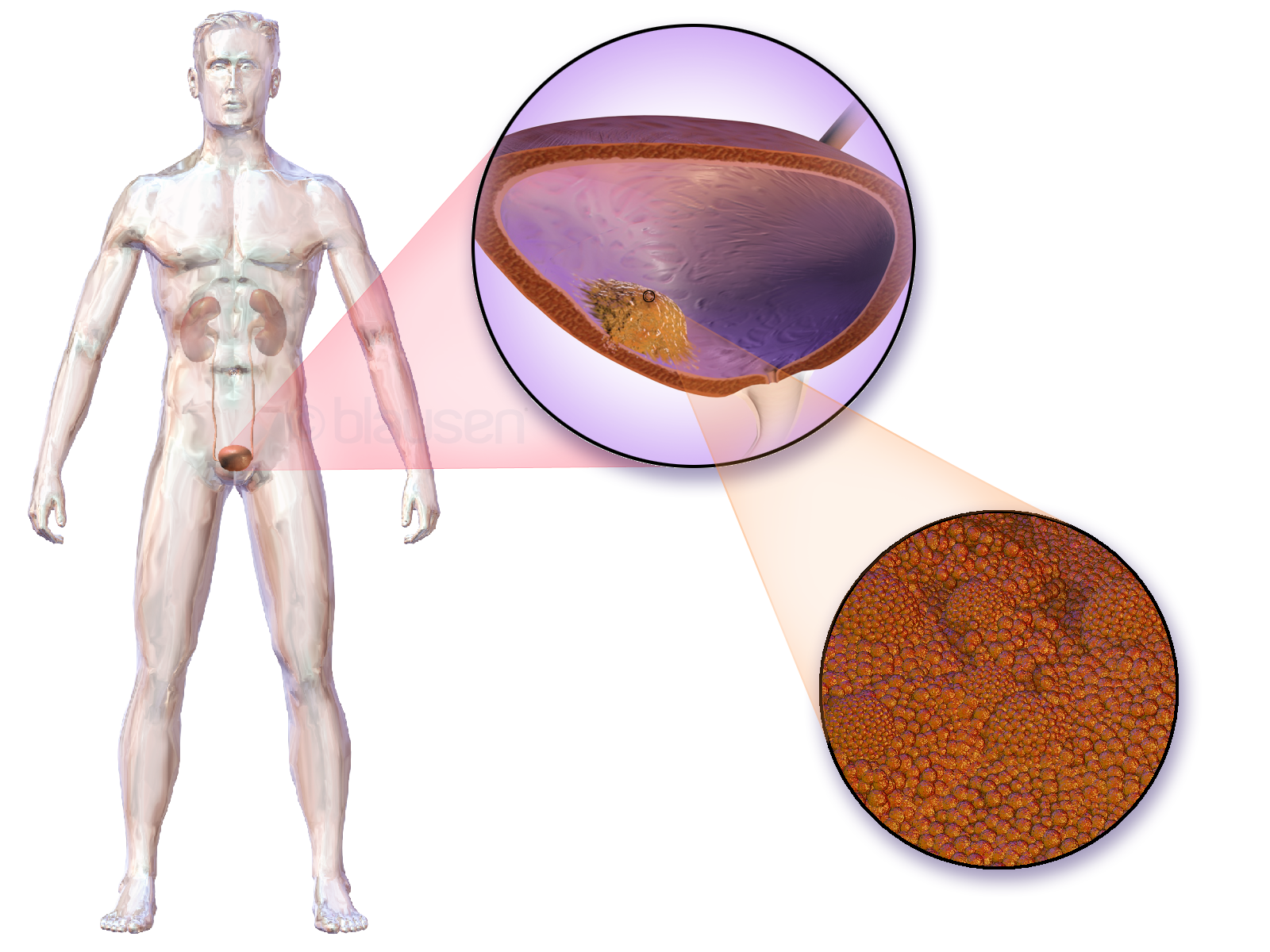
It's bladder cancer that has grown into the thick muscle layer of the bladder wall. It's usually treated with removal of the bladder (radical cystectomy), ideally after cisplatin-based chemotherapy for those who can have it.
What is enfortumab vedotin?
Enfortumab vedotin (brand name Padcev) is an antibody-drug conjugate. The antibody targets Nectin-4 on bladder cancer cells and delivers a chemotherapy payload directly to them.
Why can't some people have cisplatin?
Cisplatin can damage the kidneys, hearing and nerves, so people with reduced kidney function, hearing loss, heart failure or poor general fitness often can't have it safely.
Did adding tremelimumab help?
It improved event-free survival compared with surgery alone, but its effect on overall survival wasn't statistically significant and it caused more side effects, so the trial doesn't support adding it.
Is this treatment available now?
Not yet for this use. Both drugs are approved for other bladder cancer settings, but using them around surgery would need regulatory approval, and in the UK a NICE appraisal.
Sources
- Powles T, et al. Durvalumab, tremelimumab, and enfortumab vedotin in muscle-invasive bladder cancer. New England Journal of Medicine, 2026-10-24
- NCT04960709 on ClinicalTrials.gov. ClinicalTrials.gov
- Late-breaking phase 3 data headline ESMO 2026 Presidential Symposium I. Targeted Oncology, 2026-10-24
Medical disclaimer: For information only, not medical advice. Speak to a qualified healthcare professional about your care.
The Briefing
Trial results that matter, every Friday.
One email. The week's readouts, approvals and research, explained without hype.
Related reading
 Oncology
Tarlatamab extends small cell lung cancer survival by 8 months
24 October 2026
 Oncology
A personalised mRNA vaccine cuts melanoma relapse after surgery
24 October 2026
 Oncology
Bowel cancer immunotherapy pair keeps 3 in 4 alive at five years
24 October 2026
 Oncology
Immunotherapy lifts four-year cervical cancer survival to 40%
24 October 2026