Weekly atacicept keeps kidney function steady in IgA nephropathy
In the ORIGIN 3 trial, people with IgA nephropathy on weekly atacicept lost almost no kidney function over two years, against about 5.6 eGFR units a year on placebo.
Contents
Over two years, people with IgA nephropathy who injected atacicept once a week lost almost no kidney function, while those on placebo lost about 5.6 units of eGFR a year. That is the headline from the final efficacy analysis of the ORIGIN 3 trial, published in the New England Journal of Medicine on 22 October 2026 and presented the same week at the American Society of Nephrology's Kidney Week in Denver.
The result fills a gap. In 2026 the US Food and Drug Administration gave atacicept (brand name Trutakna, made by Vera Therapeutics) accelerated approval on the strength of a drop in urine protein at nine months. The FDA was explicit that it had "not been established" whether the drug slows kidney decline in the long term. ORIGIN 3's two-year data are the evidence meant to answer that.
What was tested
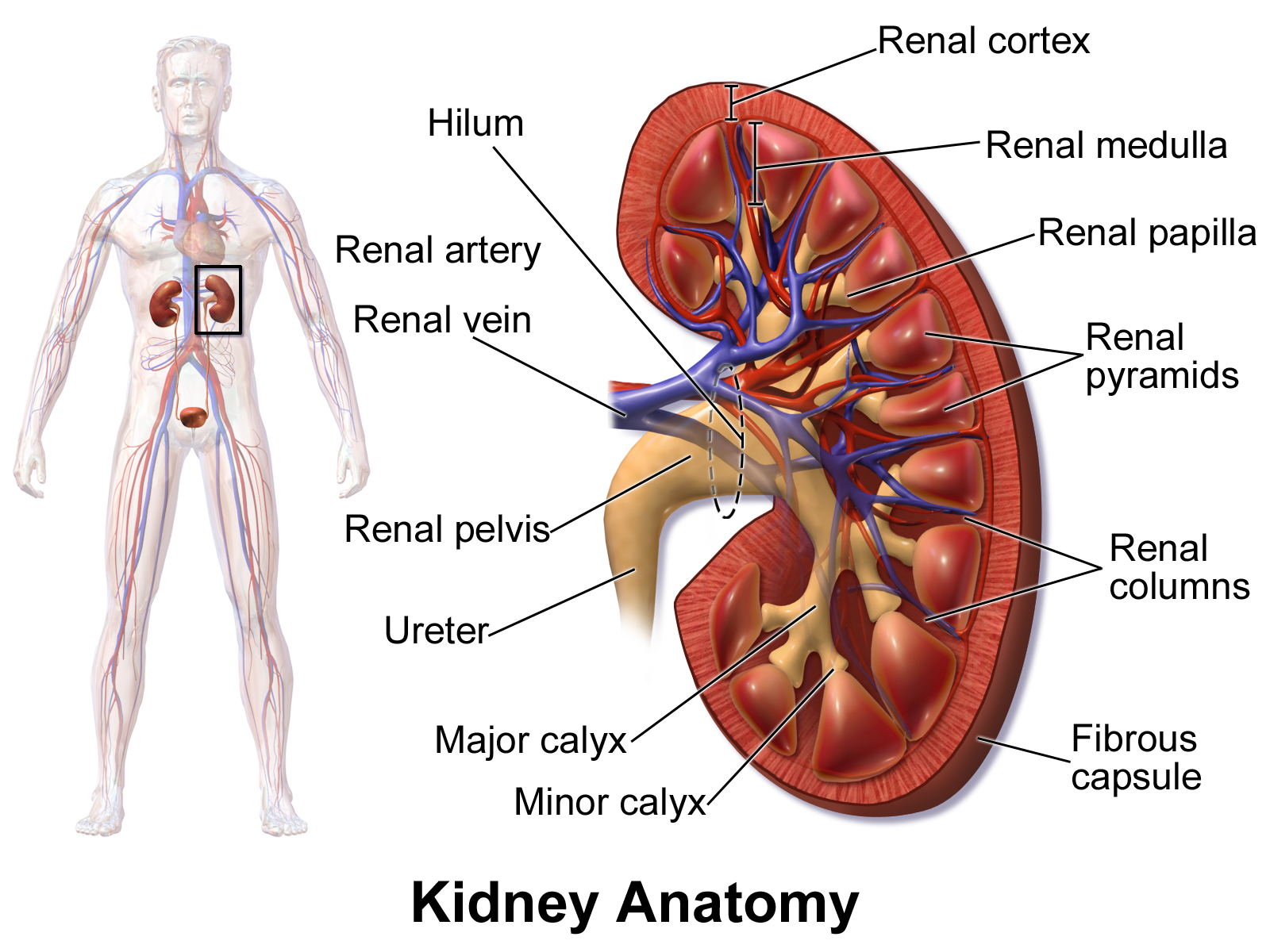
IgA nephropathy (also called Berger's disease) happens when an abnormal form of the antibody IgA, known as galactose-deficient IgA1, forms immune complexes that lodge in the kidney's filters, the glomeruli. Inflammation follows, protein and blood leak into the urine, and many patients slowly lose kidney function. A large share reach kidney failure within a couple of decades of diagnosis.
Atacicept is a fusion protein that blocks two signalling molecules, BLyS and APRIL. Both keep the B cells that make IgA alive and active. The idea is to cut production of the faulty IgA at source, upstream of the kidney damage. Most existing treatments work further downstream, by lowering blood pressure inside the kidney or damping inflammation.
In the trial, patients injected 150 mg of atacicept under the skin once a week, or a matching placebo. Everyone stayed on their usual supportive care, which in practice means a blood pressure drug such as an ACE inhibitor or ARB at the highest dose they could tolerate.
Who took part
ORIGIN 3 (NCT04716231 on ClinicalTrials.gov) randomised 431 adults with IgA nephropathy confirmed by kidney biopsy. Of these, 428 received at least one dose: 214 on atacicept and 214 on placebo. It was double blind and international.
According to Healio's report from Kidney Week, the median age was 41, 59% were men and 54% were Asian. That last figure is worth keeping in mind, because IgA nephropathy is more common and often more aggressive in East Asian populations, and the mix affects how well results carry over to a UK clinic.
The trial was presented by Jonathan Barratt, professor of renal medicine at the University of Leicester. Vera Therapeutics funded it.
Results in plain numbers
Kidney function here is measured as eGFR, the estimated glomerular filtration rate, in ml per minute per 1.73 m2. A healthy young adult sits around 90 to 120. Below 15 counts as kidney failure.
The trial tested its endpoints in a fixed order, so each one only counted if the one before it passed. All of them passed. The NEJM abstract gives these figures.
| Measure | Atacicept | Placebo | Difference |
|---|---|---|---|
| eGFR change at week 52 | -0.11 | -5.69 | 5.58 (95% CI 3.68 to 7.48) |
| Yearly eGFR slope to week 104 | -0.60 per year | -5.60 per year | 5.00 per year (95% CI 3.55 to 6.45) |
| Kidney disease progression event | 11 of 214 (5.1%) | 38 of 214 (17.8%) | Hazard ratio 0.24 |
| Dialysis, transplant or death | 0 | 7 |
The progression endpoint counted a sustained eGFR fall of 30% or more, eGFR dropping below 15, long-term dialysis, a transplant or death.
Here is the same result in absolute terms. Over roughly two years, 17.8% of placebo patients had a progression event against 5.1% on atacicept. That's a gap of 12.7 percentage points. Divide 100 by 12.7 and you get about 8, so on these figures about one progression event was avoided for every 8 people treated for two years. The hazard ratio of 0.24 is the relative version: a 76% lower rate of events. Both are correct. The absolute figure is the one to use when weighing a weekly injection.
A simple projection shows what the slopes mean. Take someone with an eGFR of 60. At the placebo rate of 5.6 a year they'd reach 15 in about eight years (45 divided by 5.6). At the atacicept rate of 0.6 a year, the same fall would take 75 years. That arithmetic assumes the slope stays constant, which the trial can't show beyond two years, so treat it as an illustration of scale only.
Other markers moved too. Healio reports that urine protein fell 51 percentage points more with atacicept than with placebo at week 52, galactose-deficient IgA1 fell 67 percentage points more, and blood in the urine cleared in 80.9% of atacicept patients against 21.4% on placebo.
Side effects
The overall rate of adverse events was similar: 74.8% on atacicept and 78.0% on placebo, per the NEJM paper. Serious adverse events were less common with the drug (7.0% against 15.4%). The one death in the trial was in the placebo group.
Drug-related adverse events were higher with atacicept, at 35% against 17.8%, and Healio says most of that difference came from injection site reactions. The US prescribing information, based on the earlier ORIGIN 3 data cut, gives more detail:
- injection site reactions in 19% on atacicept against 2% on placebo
- injection site redness in 6% against 1%
- any infection in 32% against 28%, mostly upper respiratory tract infections (12% against 9%)
The label says most reactions were mild or moderate and cleared without stopping treatment. Because atacicept dampens part of the immune system, the label also carries warnings about infection risk and about live vaccines.
Limitations
Two years is short for a disease that often takes decades to cause kidney failure. The eGFR slope is an accepted surrogate for long-term outcomes in IgA nephropathy, and regulators use it, but it is still a surrogate. Only seven hard outcomes (dialysis, transplant or death) occurred, all on placebo, which is too few to estimate the drug's effect on them with any precision.
The design changed partway through. Barratt told reporters that the steering committee, in agreement with the FDA, moved the main kidney function endpoint from two years to 52 weeks because placebo patients were losing so much function. That was an ethical call, and it was prespecified before the final analysis, but it means the two-year slope rests on fewer patients with full follow-up than the one-year figures.
The safety exposure is also modest. The FDA label's safety data reflect a median of 34 weeks on the drug. Rare infections or other problems that show up only over many years of B-cell suppression can't be ruled out by a trial of this size.
Finally, there's no head-to-head comparison. Sibeprenlimab, which blocks APRIL only, reported its own final phase 3 results (VISIONARY, NCT05248646) in NEJM the same day, with a placebo-adjusted eGFR slope difference of 4.5 per year. Different patients, different durations and different endpoint definitions mean the two numbers can't be lined up and ranked.
What it means for patients
For adults with IgA nephropathy who are still leaking protein despite good blood pressure control, ORIGIN 3 is the strongest evidence so far that blocking BLyS and APRIL keeps kidney function steady over two years. Vera Therapeutics plans to use these data to seek full FDA approval.
Access in the UK is a different matter. Barratt said at Kidney Week that these drugs were available only in the US and China, and "we don't have them in the U.K. yet". Atacicept would need a licence from the MHRA and, for NHS use in England, a recommendation from NICE. We couldn't find a published MHRA or European Medicines Agency decision as of 3 November 2026. If you have IgA nephropathy, your renal team can tell you whether any open trials of APRIL or BLyS blockers are recruiting near you; the UK Kidney Association's RaDaR registry is one route into rare kidney disease research.
This article explains published research and isn't medical advice. Talk to your kidney specialist before changing any treatment.
Frequently asked questions
Is atacicept a cure for IgA nephropathy?
No. In ORIGIN 3 it held eGFR roughly flat over two years and cut urine protein, but there's no evidence it removes the disease. Treatment is a weekly injection given indefinitely, and the trial doesn't tell us what happens when it stops. The researchers are moving placebo patients onto atacicept, so longer open-label data should follow.
How is atacicept given?
It's a 150 mg injection under the skin, once a week, using an autoinjector into the abdomen or thigh. The US instructions for use say to rotate sites and avoid bruised or scarred skin. Injection site reactions were the most common side effect in the trial, affecting about one in five people.
How does atacicept compare with sibeprenlimab?
Both target APRIL; atacicept also blocks BLyS. Each beat placebo on eGFR slope over two years in its own phase 3 trial, both published in NEJM on 22 October 2026. Their trials enrolled different populations with different endpoint definitions, so there's no reliable way to say which works better until a direct comparison or a careful pooled analysis is published.
Can I get atacicept on the NHS?
Not at the time of writing. It's approved in the US for reducing urine protein, under accelerated approval. A UK licence from the MHRA and a NICE appraisal would come first. Taking part in a clinical trial is the main route for UK patients right now, and your renal consultant is the person to ask.
Sources
- Barratt J, et al. Atacicept in IgA nephropathy: phase 3 trial final efficacy analysis. New England Journal of Medicine, 22 October 2026. New England Journal of Medicine, 2026-10-22
- ORIGIN 3 trial registration, NCT04716231, ClinicalTrials.gov. ClinicalTrials.gov
- US Food and Drug Administration. FDA approves new treatment to reduce proteinuria in adults with primary IgA nephropathy. US Food and Drug Administration
- Trutakna (atacicept-vymj) US prescribing information. US Food and Drug Administration
- Healio. Atacicept-vymj meets all 2-year prespecified endpoints for adults with IgA nephropathy, 23 October 2026. Healio, 2026-10-23
- Sibeprenlimab in IgA nephropathy: final phase 3 trial analysis (VISIONARY). New England Journal of Medicine, 22 October 2026. New England Journal of Medicine, 2026-10-22
Medical disclaimer: For information only, not medical advice. Speak to a qualified healthcare professional about your care.
The Briefing
Trial results that matter, every Friday.
One email. The week's readouts, approvals and research, explained without hype.
Related reading
 Rare Diseases
Sickle cell tablet lifts blood counts but pain crises barely move
22 October 2026
 Rare Diseases
Daily pill gives people with sun-induced pain more time outdoors
19 October 2026
 Rare Diseases
One-off Huntington's gene therapy still slows decline at 4 years
29 September 2026
 Rare Diseases
Gene-silencing drug works in rare ALS that strikes young people
22 September 2026